French Terry vs Fleece: A Hoodie Buyer's Guide
Buying Guides
Loopback or brushed inside? Compare the construction, handle and sample checks that matter when choosing fabric for a bulk hoodie or sweatshirt order.
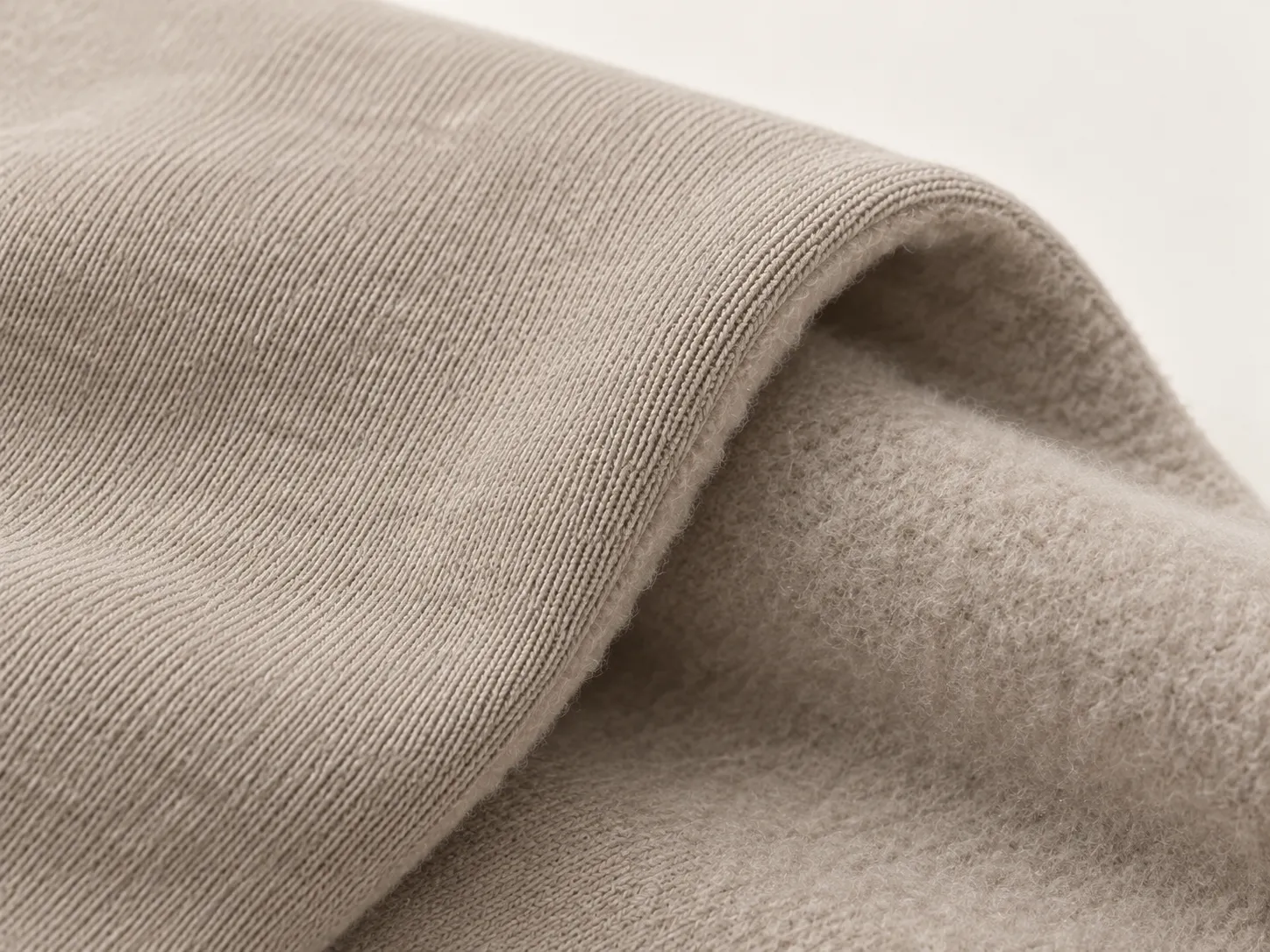
French terry and brushed sweatshirt fleece can both suit a hoodie or crewneck program. The useful buying question is which construction and finish support your intended product. Start with the inside surface, then compare complete samples against the fit, decoration and care requirements in your brief.
Understand the inside surface
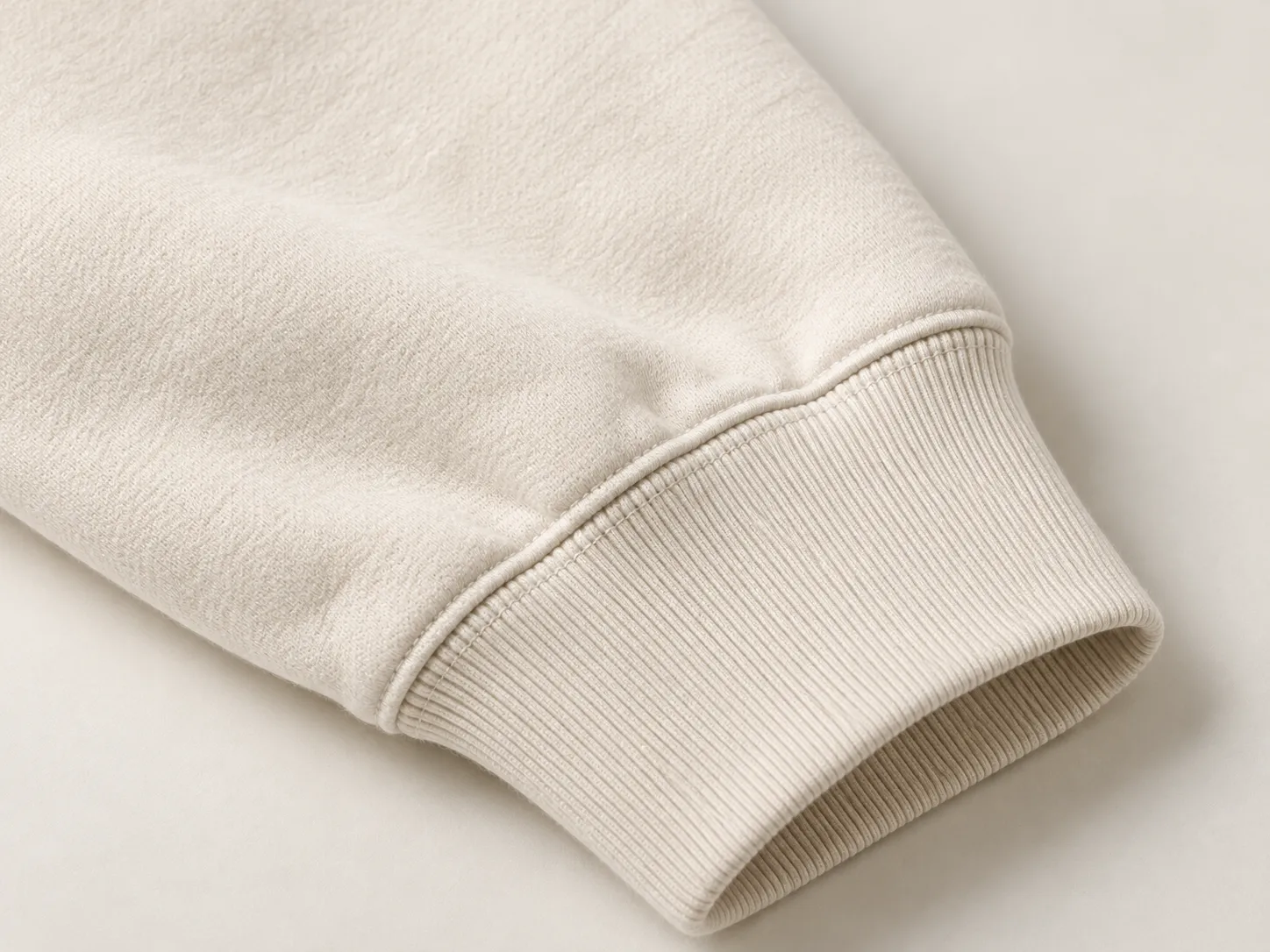
French terry, often called loopback in sweatshirt sourcing, typically combines a jersey face with visible, unbrushed loops on the reverse. Brushed sweatshirt fleece has yarns on the reverse raised into a soft nap. CottonWorks explains this distinction using two-end constructions: the underlying knit can remain the same while napping changes the inside surface. Three-end constructions also exist. CottonWorks: Single & Double Knits.
These names do not specify fiber content. Ask for the composition separately, including whether the face yarn differs from the overall blend. A cotton-facing description and a whole-fabric cotton percentage answer different questions.
Avoid using “fleece” alone in a purchase specification. The term also covers fabrics such as synthetic polar fleece used for outdoor layers. Polartec describes its Fleece Series as a synthetic knit with a raised pile; it should not be treated as interchangeable with a smooth-face sweatshirt fabric. Polartec: Fleece Series.
Describe the product before choosing a fabric
Give the supplier a short wearing brief: intended season, typical indoor or outdoor use, whether the garment will sit under a jacket, and the silhouette you want. “A relaxed sweatshirt for everyday layering” is more useful than “premium fabric.” Add a reference garment when possible and explain which qualities matter: its dry handle, soft reverse, compact body or fluid drape.
For a visible loopback interior, French terry is the relevant starting point. For a visibly raised, soft interior, request brushed sweatshirt fleece. Neither choice fixes the finished garment’s warmth or bulk. Weight, construction, finishing and the garment design still need to be considered together. Use the hoodie GSM guide to keep weight comparisons meaningful.
Compare matched swatches, then complete garments
Ask for labeled swatches that identify the construction, composition, stated GSM, finish and sample reference. If the two candidates differ in several of these, record those differences. Otherwise, it is easy to attribute a softer feel to brushing when the comparison also changed yarns or finishing.
Handle both sides under the same conditions. Look at the consistency of the face and reverse, then fold and gently compress the swatches. Record observations in specific language: “pronounced reverse loops,” “dense raised surface” or “face feels dry.” A photograph can help document appearance, but it cannot establish composition, weight or performance. The cover image here is illustrative, not a fabric test specimen.
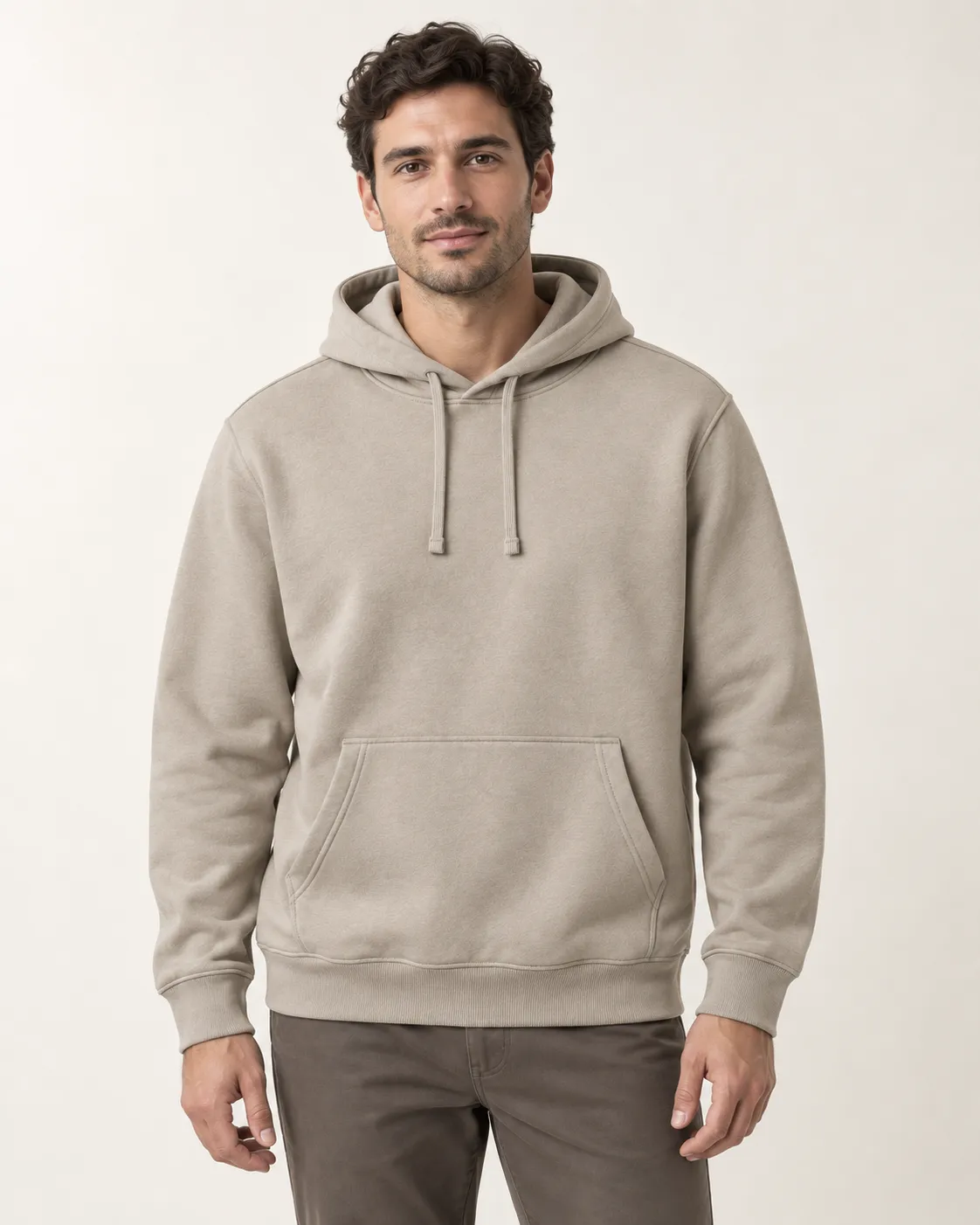
A swatch cannot settle the full garment decision. Review the chosen fabric in a sample with the proposed hood, pocket, seams and rib. Check how the shoulder falls, whether the hood sits as intended, and whether the waistband pulls the body into the desired shape. Assess the fit over the layer your customer is likely to wear underneath.
Review laundering and decoration together
Keep an unwashed reference and evaluate a second sample after the agreed washing and drying procedure. Measure the same marked points before and after, and inspect body shape, seam alignment, rib recovery and changes in surface appearance. AATCC TM150 addresses garment length and width changes after home laundering; a named method provides a clearer basis for an agreed evaluation than “wash tested.” AATCC: TM150.
Agree the number of cycles and acceptance criteria with the supplier or laboratory. A casual wash comparison is useful during development, but it does not establish a formal test result or justify a performance claim. Neither loopback nor a brushed reverse should be assumed to prevent shrinkage, pilling or shedding.
Also request decoration on the actual proposed fabric and color. Inspect the print or embroidery before and after the agreed care procedure, paying attention to surface appearance, puckering and how the decorated area feels. The artwork and label checklist helps define the files and placement information needed for that sample.
Turn the selection into an approval record
Before approving fabric for a bulk order, bring the commercial description and physical reference together. Record:
- The fabric reference, composition, construction and reverse finish.
- The target GSM, agreed tolerance and measurement basis.
- The approved color reference and any specified wash or finish.
- The sample identifier, garment measurements and approval comments.
- The agreed care evaluation, relevant test requirements and acceptance criteria.
Keep one approved reference accessible to the buyer and supplier, with a clear revision identifier. If the finish, composition or fabric source changes, identify what needs reapproval. The outcome should be a fabric decision that another member of your team can understand and verify without relying on the phrase “same quality.”
Further reading
- CottonWorks: Single & Double Knits — knit structures and the distinction between unbrushed and napped sweatshirt fabrics.
- Polartec: Fleece Series — an example of synthetic fleece outside the smooth-face sweatshirt category.
- AATCC: TM150 — the published scope of garment dimensional-change testing after home laundering.