Hoodie GSM: How to Specify Fabric Weight
Buying Guides
GSM is a useful fabric specification, but it is only one part of the buying decision. Learn how to compare weights, review samples and record an approval.
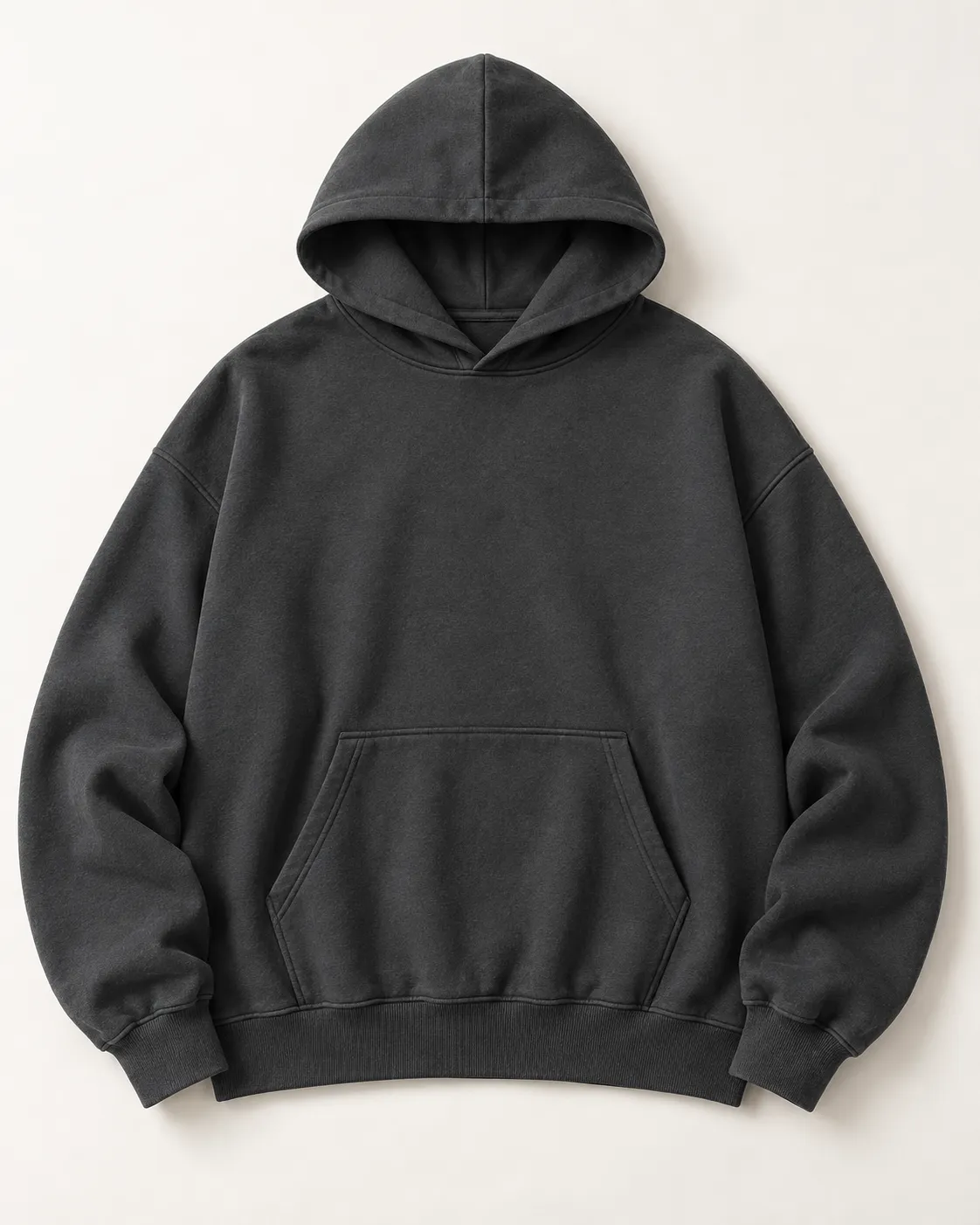
A hoodie brief often begins with a GSM number. That number is useful when everyone agrees what is being measured, but it cannot replace a fabric description or an approved garment sample. For a brand or distributor placing a bulk order, the aim is to connect fabric weight to a defined product and a repeatable acceptance check.
What GSM actually measures
GSM means grams per square metre: the mass of fabric over a given area. A fabric described as 350 GSM has a nominal mass of 350 grams for one square metre. This example explains the unit; it is not a recommended weight or a statement about a particular product.
The number is not the weight of a completed hoodie. Garment size, pattern pieces, hood layers, pockets, rib, drawcords, zips and decoration all contribute to finished garment mass. Weighing a hoodie on a scale cannot, by itself, verify its fabric GSM.
ASTM D3776/D3776M covers measurement of fabric mass per unit area and distinguishes several sampling options. Its public abstract also notes that a small-swatch result applies to the tested sample, not necessarily to its originating lot. That distinction matters when deciding how a bulk shipment will be checked. ASTM: D3776/D3776M.
Keep weight separate from quality and warmth
A higher GSM value means more mass per unit area. It does not certify better yarn, more durable seams, accurate sizing, stable color or a better garment. Define those requirements directly instead of treating weight as a score.
Warmth also needs its own evaluation. Two fabrics with the same GSM may have different structures, surface finishes and thicknesses. The finished hoodie introduces further variables, including its fit and lining. Thermal resistance is a separate measurable property: ISO 11092 describes a method for measuring thermal and water-vapour resistance under controlled conditions. A GSM label does not supply those results. ISO: 11092.
Likewise, “lightweight,” “midweight” and “heavyweight” should be treated as descriptions to clarify. Ask for a numerical specification and a physical reference. A universal table assigning every hoodie weight to a season can hide the differences between a compact loopback fabric and a loftier brushed construction.
Choose a weight through comparison
Start with the intended wearing experience. Define the silhouette, likely layering, target season and preferred feel. If a reference garment is available, identify what you want to retain and what should change. For example, you may want its body drape with a less bulky hood, rather than a heavier version of the entire garment.
Compare two or three candidate weights within a similar composition, construction and finish. If those variables change too, label the samples accordingly. The French terry and fleece guide explains why the reverse surface deserves a separate decision.
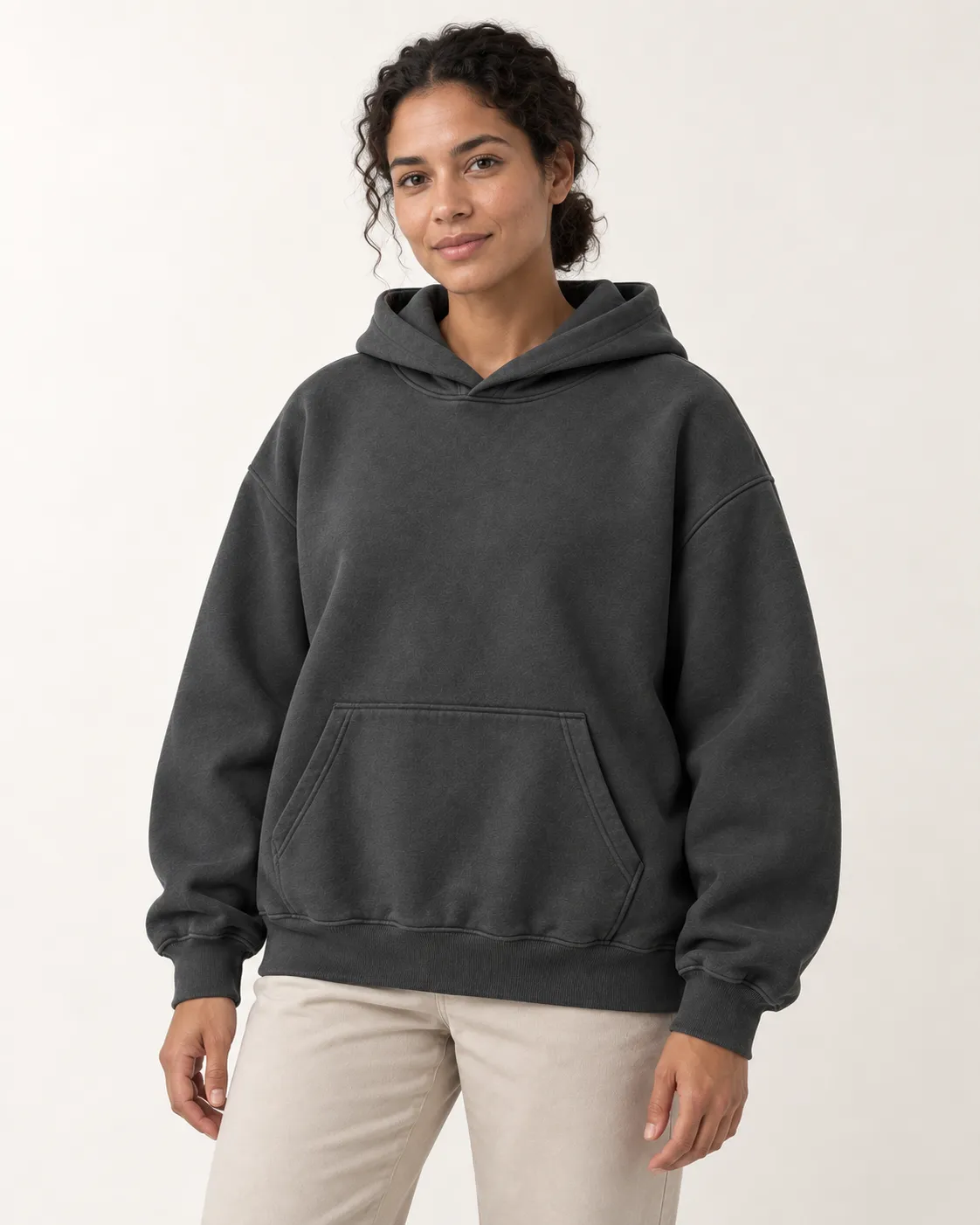
Move the promising fabric into a complete sample. Inspect the shoulder, hood, pocket opening and hem on a person, then fold and pack the garment as intended. Use these observations to select the product you want to sell. Do not increase the weight simply to reach a marketable number if the sample already meets the brief.
State the basis of the weight specification
Ask whether a quoted GSM refers to the finished fabric and whether any later garment treatment changes the material being approved. Keep comparisons on the same basis. A number measured before finishing should not be silently compared with one measured after a different treatment.
Agree the test method, specimen conditioning, sampling plan and reporting basis before resolving a weight dispute. Avoid adopting a generic tolerance from another order. The acceptable tolerance belongs in the specification and needs agreement between buyer and supplier.
Specify the main body fabric separately from rib and hood lining where those materials differ. One headline GSM value should not be assumed to describe every component. Keep finished garment weight as a separate field if it is needed for packing or logistics.
Confirm the result after care and decoration
Retain an unwashed sample and assess another using the agreed care procedure. Record garment dimensions, shape and appearance before and after. AATCC TM150 addresses dimensional changes in garments after home laundering; weight alone cannot stand in for this check. AATCC: TM150.
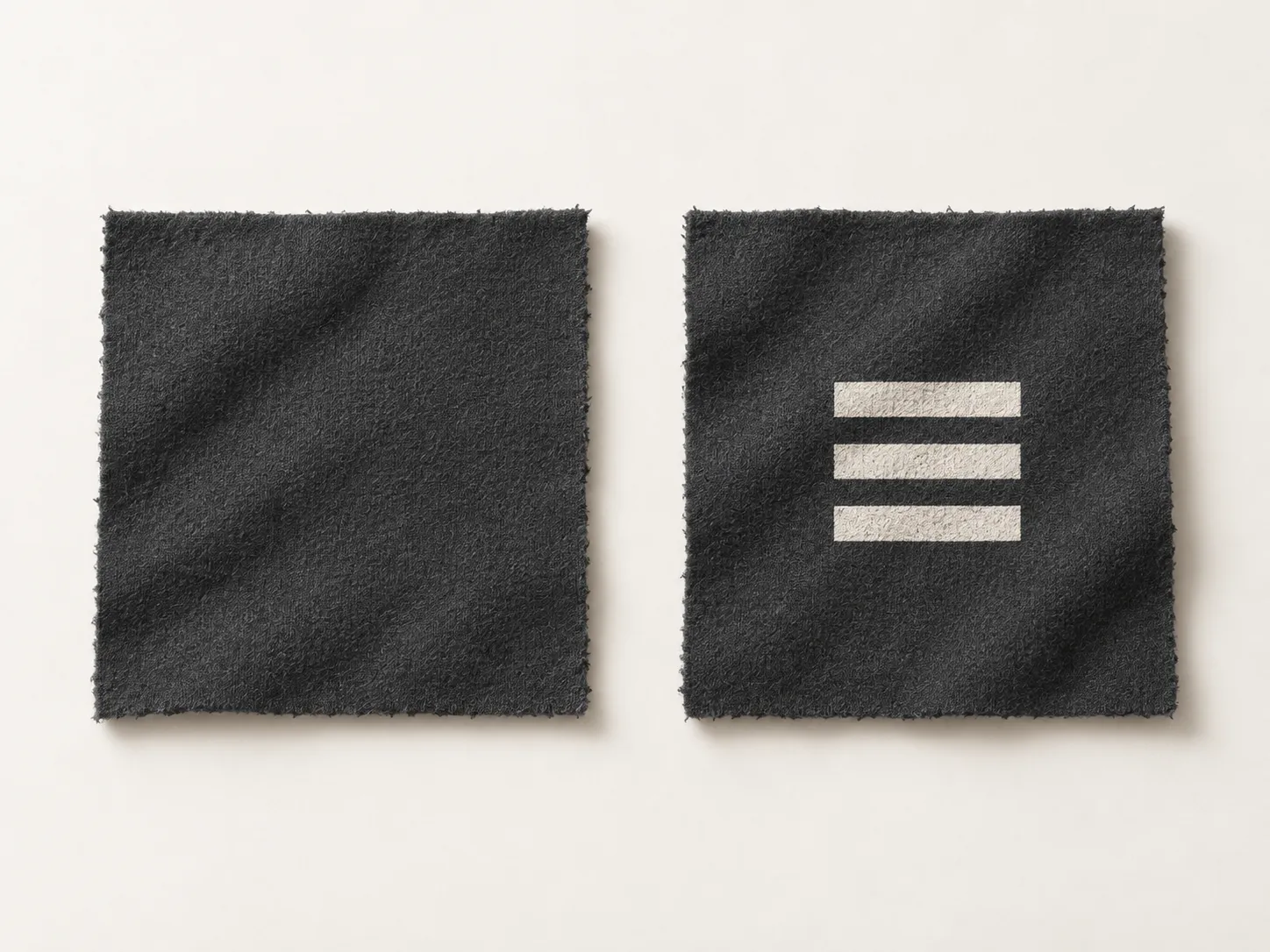
Review the intended print or embroidery on the selected material as well. Use the actual placement and size so the sample can reveal changes in drape or comfort around the decorated area. Record what is approved and what remains provisional before committing the specification to a purchase order.
Put the approval into the buying brief
A useful fabric-weight brief includes:
- Fabric reference, fiber composition and knit construction.
- Reverse finish and any specified fabric or garment treatment.
- Target GSM, agreed tolerance and the stage at which it is measured.
- Measurement method, conditioning and agreed bulk sampling approach.
- Separate specifications for rib, lining and other relevant components.
- Approved garment sample, fit measurements and care-evaluation requirements.
Keep these details alongside the style, color and size quantities in the bulk-order quantity breakdown. This lets the buying team compare offers on a shared basis and makes a later change in fabric easier to identify before production proceeds.
Further reading
- ASTM: D3776/D3776M — public scope and sampling options for fabric mass per unit area.
- ISO: 11092 — thermal and water-vapour resistance as separate measured properties.
- AATCC: TM150 — public scope of dimensional-change testing for garments after home laundering.